Date: February 28th, 2026
Estimated reading time: 10 minutes
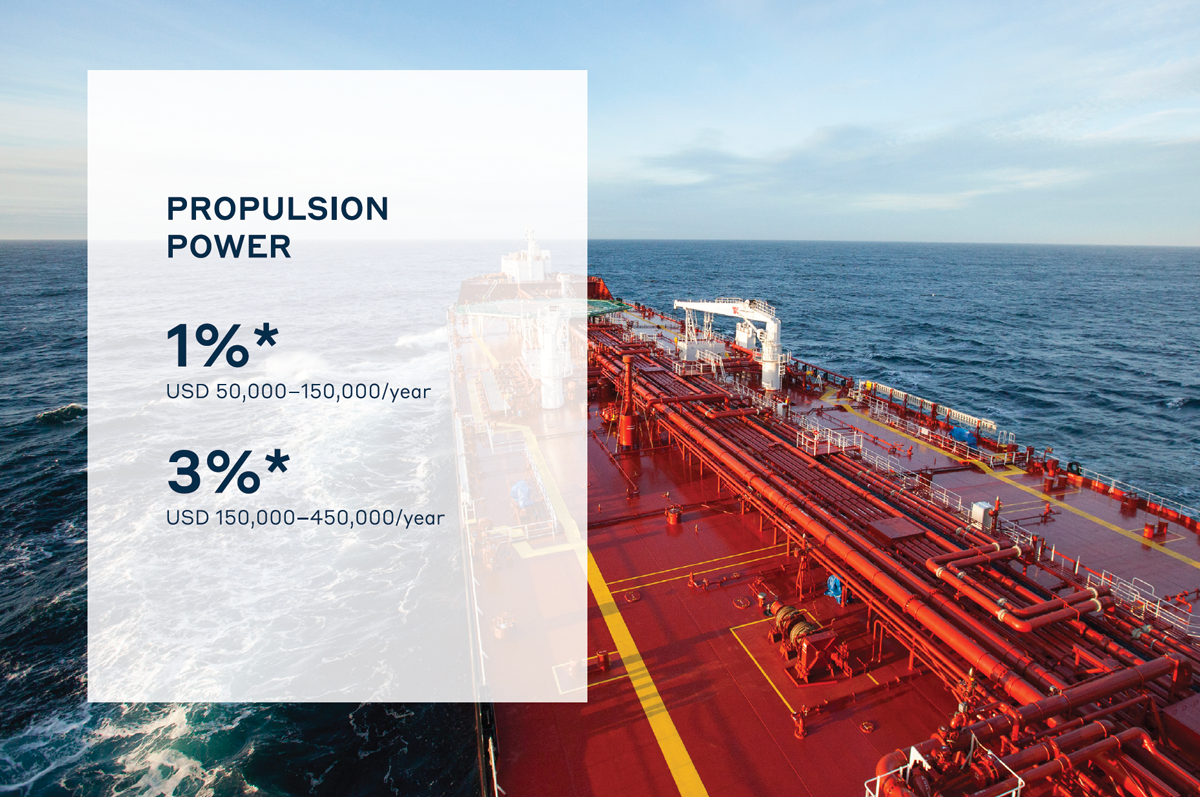
If your steering gear is quietly wasting 1-3%* extra propulsion power every hour at sea, will you see it on a single daily report? From our experience the answer is no - but you will certainly see it, not only on your annual fuel bill, but in your emissions statement and in your CII rating and conversations with charterers and cargo owners.
Neuver rotary vane steering gears are specifically engineered to attack exactly this hidden cost - building on a long legacy of steering gear excellence under the Tenfjord, Frydenbø, Rolls‑Royce and Kongsberg names, while giving owners and technical managers the uptime, reliability and peace of mind they need for secure time‑charter performance.
Executive summary
Most fuel and emissions discussions start with hull, propeller, rudders and main engine. The steering gear is often treated as a commodity - as long as the rudder moves and class is satisfied; it disappears into the background.
But steering behaviour has a direct effect on:
Conventional RAM steering gears, with their cylinders, pins, linkages and valves, tend to build up mechanical play and internal leakage over time. That creates a large effective deadband: a range where small rudder commands do not translate into real motion. The autopilot keeps increasing the command until it finally overcomes this deadband; the rudder then moves in a largerthanideal step, overshoots, and the process repeats in the other direction. The vessel hunts around the set course, the rudder never really rests, and the propeller is working harder than necessary.
The chain is simple:
Better steering gear accuracy and smaller deadband → less hunting and smaller rudder angles → lower rudderinduced resistance → reduced average propulsion power at a given speed → lower annual fuel consumption and CO₂.
Even a few percent reduction in average propulsion power is a meaningful number on a modern vessel. That is precisely the margin Neuver steering gears are engineered to help you take back.
*On a typical deepsea vessel, that kind of margin can easily be worth hundreds of thousands of dollars over a few years of operation, depending on vessel design, fuel price and trading pattern.
To move beyond theory, Neuver has initiated a Steering Efficiency Verification program together with independent third parties to verify the actual fuel and CO₂ savings from our steering gear installations under real trading conditions - including detailed analysis of propulsion power, rudder activity and voyage performance on selected reference vessels. Owners and technical managers who want to be part of this verification work, or benchmark their own vessels, are very welcome to reach out and engage with us.
Instead of being asked to “trust the brochure”, participating owners get a quantified picture of how a Neuver rotary vane steering gear influences mean rudder angle, hunting behaviour and propulsion power on their own ships.
Neuver does not start from zero.
Our rotary vane steering gears stand on the shoulders of a long and recognised heritage: Tenfjord, Frydenbø, RollsRoyce Marine and Kongsberg Maritime steering gear technology delivered to thousands of vessels worldwide.
What changes with Neuver is the focus.
Instead of treating steering gear as a “black box” component, we focus explicitly on:
This means the Neuver name on a steering gear today carries the same engineering DNA that owners have relied on for decades - now with an even sharper focus on efficiency and uptime.
In parallel with this heritage, many vessels still operate with traditional multiram steering gears from various suppliers. The operating principles are well known, but they rely on cylinders, linkages and mechanical interfaces between actuator and rudder stock - and therefore tend to accumulate more backlash, wear and internal leakage over time.
Neuver rotary vane steering gears are the natural evolution of our own legacy: taking the proven concept further and turning steering gear into an active lever for energy efficiency and operational reliability - not just a mandatory item on the machinery list.

Mechanically, a Neuver rotary vane steering gear is built on a compact, integrated geometry. The actuator and rudder stock are directly coupled, with far fewer external mechanical joints than a multiram system. This gives high torsional stiffness and very low inherent backlash.
Hydraulically, the design focuses on small, well controlled oil volumes and short oil paths. When the steering gear receives a small rudder command, it responds quickly and precisely, without having to “fight through” friction, clearances or internal bypassing.
In practice, this means:
Day to day, Neuver rotary vane steering gears help keep the mean rudder angle close to zero and reduce unnecessary rudder oscillations. That lowers the extra resistance the rudder adds to the hull and allows the ship to do the same job with less power.
.jpeg)
On a rotary vane steering gear, sealing is where long-term performance is won or lost. It is not only about preventing visible leaks; it defines how accurately and efficiently the actuator works over time.
In a Neuver design, the sealing system is engineered for low, stable internal leakage over the whole service life of the unit, not just during sea trials:
Different rotary vane concepts solve sealing in different ways. Our philosophy is to minimise wear at the sealing interface and keep internal leakage predictable, so that the steering gear behaves as the autopilot expects even many years after delivery.
Concepts that rely on high wear interfaces - for example, metal strips against cast iron housings - often look tight on day one, but as they wear, internal leakage increases, oil temperature rises, viscosity drops, and more of each command is lost internally. Steering becomes less precise, deadband grows, and rudder induced losses go up.
Neuver’s lowleak seal design is therefore directly linked to both efficiency and reliability. It preserves the energysaving potential of the rotary vane concept and protects the stable, predictable behaviour that owners and crews depend on.
Modern autopilots offer powerful tuning options: adjustable rudder gain, counterc rudder, course stability parameters and electronic deadband. But even the best control algorithm is limited by the mechanical behaviour of the steering gear.
Mechanical deadband shows up as a hidden extra deadband in the control loop. If it is large and irregular, the autopilot is forced into compromise:
Because Neuver rotary vane steering gears maintain very small and stable mechanical deadband, modern autopilots can be tuned much closer to their ideal operating point:
For the crew, this feels like a ship that simply holds the course - in heavy weather, tight fairways and open sea - without constant manual intervention. For the vessel operator or charterer, it means predictable behaviour and less wasted energy.

For owners and technical managers, steering gear is also about risk and peace of mind. Neuver rotary vane steering gears support this by:
On paper, several steering gear concepts can deliver similar torque on day one. The difference often appears in year five or ten. Neuver designs the sealing system, oil paths and control logic to keep steering accuracy and deadband close to “as new” over a long period – so the fuel and CII benefits are not just a commissioning day reference.
As a lifecycle partner, Neuver supports owners with recommended maintenance practices, upgrades and monitoring tools, making it easier to keep steering performance throughout the vessel’s life - not just in the first few years.
As long as the owner or technical manager takes care of the unit, the result is:
When you specify your next steering gear, you are not only choosing a mechanical principle. You are choosing whose design decisions, spares philosophy and support culture you will live with for 25+ years. Neuver is focused on steering and maneuvering systems - and that focus is reflected in our design philosophy, our support tools and the way we think about long-term risk for owners.
You deliver the vessel. Neuver helps you deliver the promise behind the charter.
Steering gear choice also matters for yards and designers. Neuver rotary vane steering gears are engineered to be yard friendly without compromising performance.
Compared with traditional RAM installations, a Neuver steering gear typically offers:
For the yard, that can significantly reduce design hours, steelwork and installation time. For the owner, simpler installations mean cleaner spaces, easier access for inspection and maintenance, and fewer potential sources of corrosion and mechanical damage.
Neuver steering gears are the heart of the system. They deliver the steering accuracy, fuel efficiency and reliability that make an immediate impact on daily operations and lifecycle cost.
For operators who want to go one step further, Neuver also offers a complete maneuvering package: a Neuver rotary vane steering gear combined with a high performance, fuel efficient flap rudder with twist and bulb.
This integrated Neuver maneuvering solution builds on the same philosophy:
The Neuver steering gear and the flap rudder with twist and bulb unlock additional gains in low speed control, stopping, turning and overall propulsive efficiency. Together they form a sustainable, world class maneuvering solution for modern vessels - without adding unnecessary complexity on board.
_3_transparent.png)
Many owners still treat steering gear as a commodity. Those who don’t will quietly run:
If you want to:
reach out to us directly - and we will walk you through the numbers for your vessels and operating profiles. If fuel, CII and uptime matter to you, you want Neuver steering gears. Neuver rotary vane steering gears turn that choice into a concrete, long-term advantage in efficiency, reliability and peace of mind.
Your steering gear is working every second at sea. With Neuver, it works for your fuel bill, your uptime - and your peace of mind.
And because Neuver stays with you from newbuild through the vessel lifetime, you are not just choosing a steering gear - you are choosing a long-term partner for the maneuvering systems your charter commitments depend on.
Please contact our experienced sales team at a location near you. They’ll help you explore what we can do for your vessel and find a solution tailored to your needs: https://www.neuver.com/contact

Neuver Maritime
HQ Brattvåg
Aarsundvegen 24
6270 Brattvåg